
Shuttleworth
Explore
Explore Bury St Edmunds Abbey, a historic ruin in Suffolk’s Abbey Gardens. Visit nearby Ickworth House and Lavenham for a rich heritage experience.
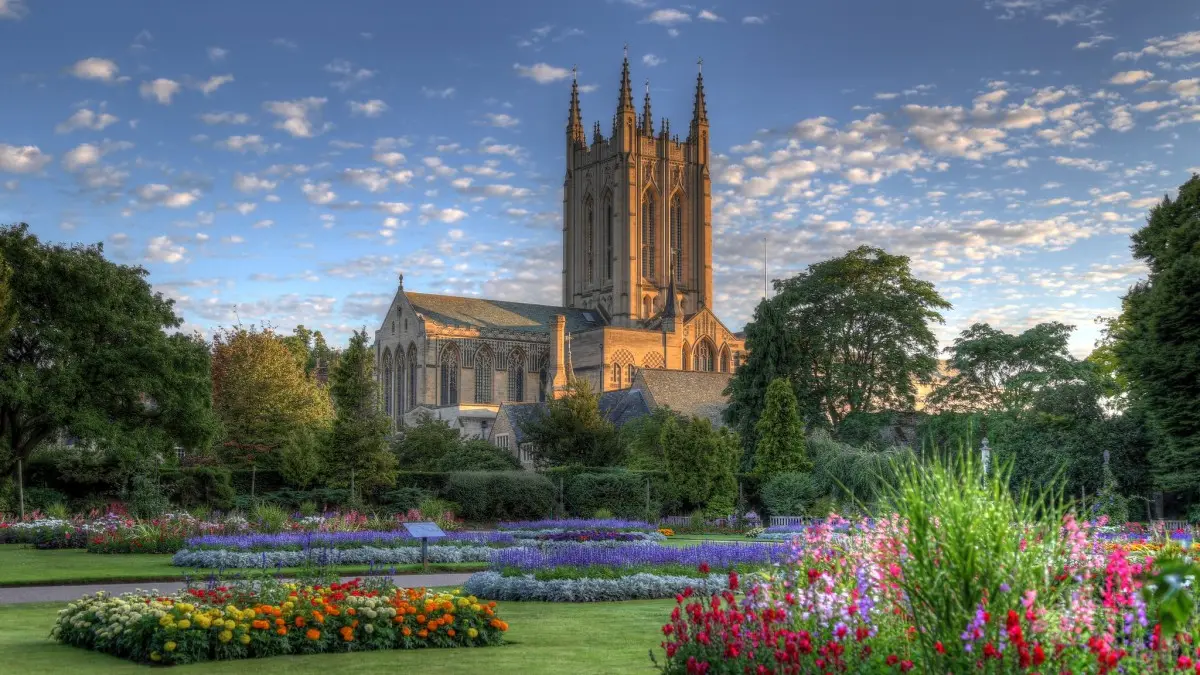
Bury St Edmunds Abbey, a historic gem in Suffolk, is a captivating ruin that tells the story of one of England’s most powerful medieval monasteries. Founded in 1020 to house the relics of St Edmund, the martyred king of East Anglia, the abbey flourished until its dissolution in 1539. Managed by English Heritage, its atmospheric remains, set within the serene Abbey Gardens, feature towering arches, crumbled cloisters, and the evocative Abbot’s Palace, offering visitors a glimpse into monastic life.
The abbey’s sprawling grounds, dotted with ancient stonework, invite exploration amidst vibrant flowerbeds and tranquil lawns. The nearby St Edmundsbury Cathedral, expanded from the abbey’s former church, adds spiritual depth with its modern tower and stunning stained glass. Visitors can enjoy free guided tours, seasonal events like medieval reenactments, or picnics in the gardens. The abbey’s interpretive panels provide insights into its past, while the adjacent visitor center offers refreshments and local history.
Nearby attractions include Ickworth House, a striking Georgian mansion with Italianate gardens, just 4 miles away. The historic market town of Lavenham, with its timber-framed houses, and the Anglo-Saxon village reconstruction at West Stow are within a 20-minute drive. Bury St Edmunds Abbey’s rich history, peaceful setting, and proximity to Suffolk’s treasures make it an essential stop for heritage enthusiasts.
The evocative ruins, including the Abbot’s Palace and gatehouse, showcase the abbey’s former grandeur. Their weathered stone arches offer a haunting glimpse into medieval monastic life.
These vibrant gardens, surrounding the ruins, feature colorful flowerbeds, manicured lawns, and a sensory garden, providing a serene setting for picnics and reflection.
The site of St Edmund’s shrine, marked within the ruins, honors the martyred king. Interpretive panels detail his legacy, drawing history enthusiasts to this sacred spot.
The imposing 14th-century gatehouse, a surviving entrance to the abbey, impresses with its intricate stonework, offering a striking introduction to the historic site.
The remnants of the medieval cloisters, framed by the gardens, invite exploration. Their quiet beauty and historical significance create a contemplative atmosphere for visitors.
The nearby visitor center offers displays on the abbey’s history and St Edmund’s story, with artifacts and interactive panels that enrich the experience for all ages.
Why not make a weekend of it? Explore Nearby Attractions. Scroll to zoom in or out on map.
Curious about Bury St Edmunds Abbey? We've compiled answers to the most frequently asked questions to help you uncover the highlights and visitor essentials.
The abbey is renowned for its medieval ruins, its association with St Edmund, and its picturesque setting in the Abbey Gardens, a historic monastic site.
Founded in 1020 to house St Edmund’s relics, the abbey became a major Benedictine monastery. It thrived until the Dissolution of the Monasteries in 1539, leaving ruins that English Heritage now preserves.
The abbey ruins and Abbey Gardens are free to visit. Donations are welcomed, and some events may have fees; check www.english-heritage.org.uk for details.
Dogs on leads are welcome in the Abbey Gardens and ruins. Assistance dogs are permitted in all areas, including the visitor center.
Facilities include public toilets, a visitor center with a café, picnic areas, and nearby parking. The gardens have benches for relaxation.
Yes, the cathedral, adjacent to the abbey, is open daily with free entry (donations encouraged). Guided tours and tower climbs are available; check www.stedscathedral.org.
Make your trip unforgettable by exploring these nearby attractions during your visit.
 Biggleswade
 Norwich
 Bury St Edmunds
 Framlingham
 Dunstable
 Thetford
 Norwich
 Cambridge
 Great Yarmouth
 Broxbourne
 Ely
Ely
 Cambridge