
Crealy Theme Park
Explore
Discover Stonehenge, a 4,500-year-old UNESCO World Heritage Site on Salisbury Plain. Unravel its mysteries, explore the visitor center, and delve into ancient British history.
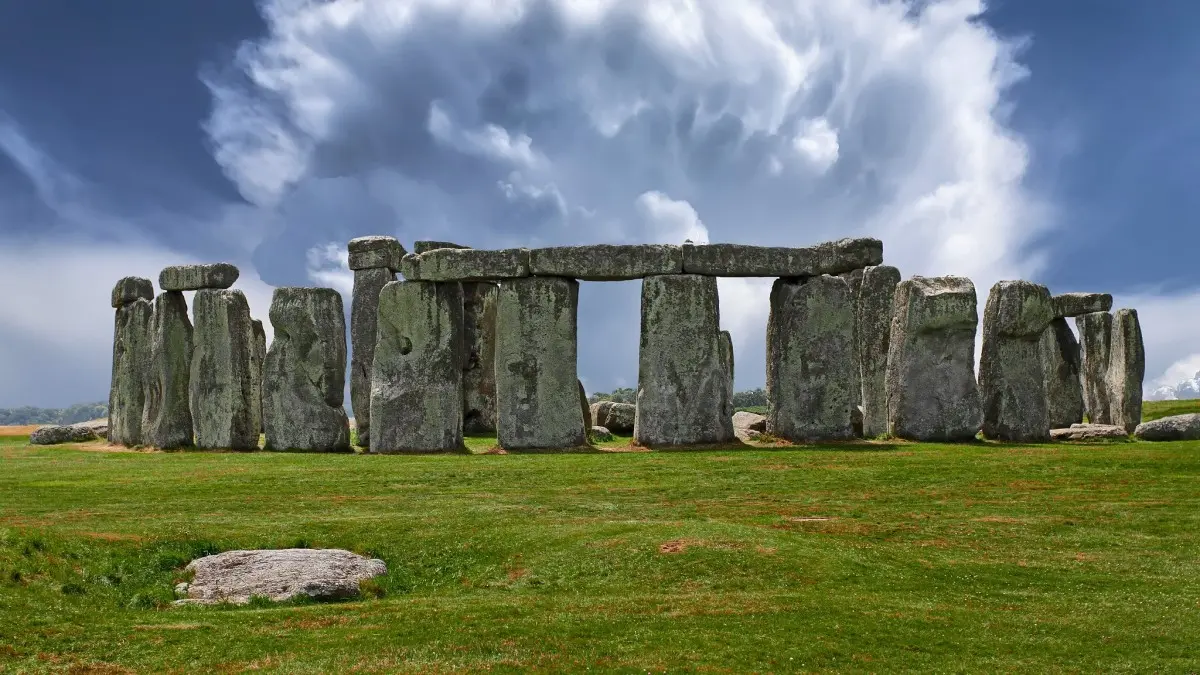
Stonehenge, one of the world’s most iconic prehistoric monuments, stands proudly on Salisbury Plain in Wiltshire, England. Comprising a mysterious circle of towering sarsen stones and smaller bluestones, Stonehenge has puzzled historians, archaeologists, and visitors for centuries. Its origins date back over 4,500 years, and while its exact purpose remains a subject of debate, many believe it served as a ceremonial or astronomical site for ancient peoples.
Exploring the Stonehenge Visitor Centre offers insights into the monument’s construction, life in Neolithic times, and the various theories surrounding its use. The center’s exhibits showcase replicas, interactive displays, and ancient artifacts that paint a vivid picture of this remarkable era. A shuttle bus takes you close to the stone circle, where you can walk around the monument and immerse yourself in the atmosphere that has captivated imaginations for generations.
Stonehenge’s significance goes beyond its massive stones—this UNESCO World Heritage Site symbolises human ingenuity, culture, and ritual. Surrounded by other prehistoric landmarks like the Avenue and Woodhenge, the area is a window into Britain’s ancient past. Whether you’re intrigued by its astronomical alignments or simply want to experience the power of standing amidst these monumental stones, a visit to Stonehenge is a journey into the cradle of British history.
Walk around the iconic circle of sarsen stones and bluestones, towering above Salisbury Plain. Their arrangement is believed to align with the movements of the sun during solstices.
Explore interactive displays and ancient artifacts that offer fascinating perspectives on Neolithic life and the complex construction of Stonehenge.
Discover other nearby monuments like the Avenue, Woodhenge, and barrows dotting the plains, revealing a vast prehistoric complex worth exploring.
Experience the magic of Stonehenge during summer and winter solstices, when the sun’s alignment with the stones creates a unique and atmospheric event.
Why not make a weekend of it? Explore Nearby Attractions. Scroll to zoom in or out on map.
Curious about Stonehenge? We've compiled answers to the most frequently asked questions to help you uncover the highlights and visitor essentials.
Stonehenge was constructed in several stages over a period of 1,500 years, beginning around 3000 BC, during the Neolithic and Bronze Ages.
The earliest earthwork at Stonehenge dates to around 3000 BC, making parts of it over 5,000 years old.
While no one knows for certain, it’s believed that various groups, including Neolithic farmers, played a role in constructing Stonehenge.
Early morning or late afternoon on weekdays is often quieter. Solstice celebrations (in June and December) are also significant but can be crowded.
Audio guides and guided tours are offered, providing insights into the monument’s history, theories, and surrounding landscapes.
Make your trip unforgettable by exploring these nearby attractions during your visit.
 Exeter
 Ilchester
 Falmouth
 Bath
Bath
 Wareham
 Bovington
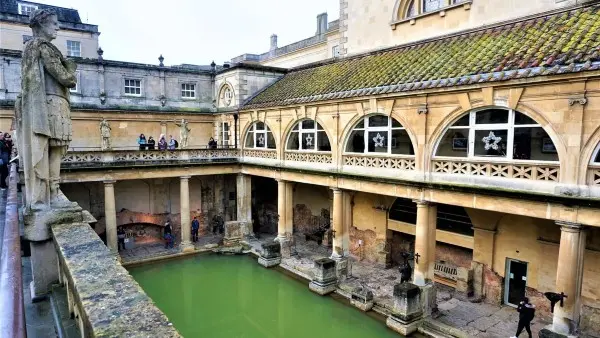 Bath
Bath
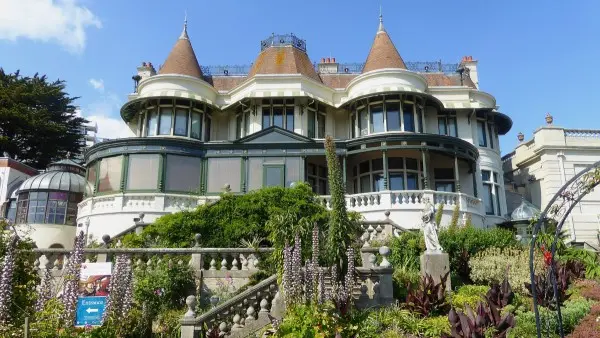 Bournemouth
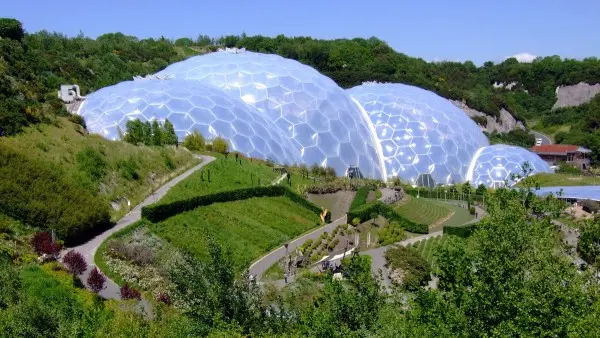 Par
Par
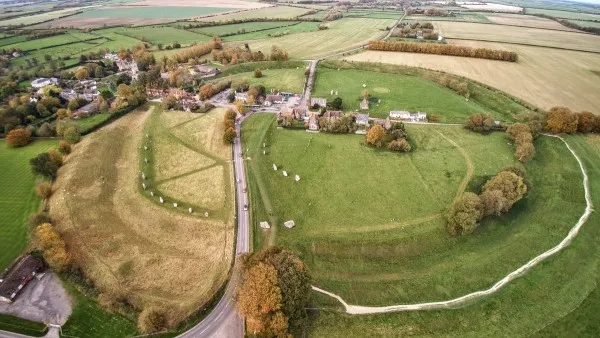 Marlborough
 Warminster
 Penzance